
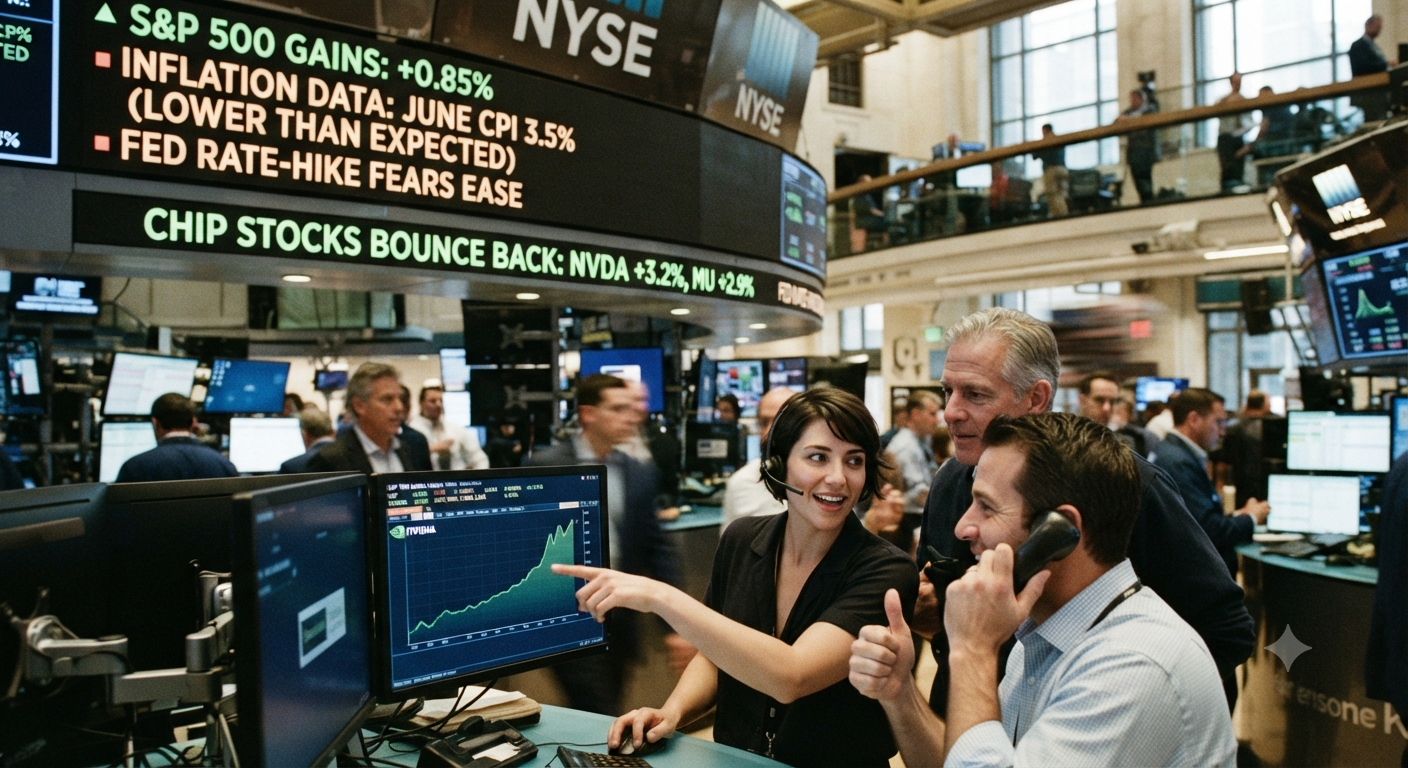
The U.S. financial markets have demonstrated notable resilience in mid-July 2026, as a combination of positive economic data and a recovery in the technology sector helped steer indices higher. Following reports that June inflation arrived at 3.5%—a figure lower than many economists had initially anticipated—investor sentiment shifted, effectively easing concerns regarding potential aggressive interest rate hikes from the Federal Reserve. This stabilization has provided a much-needed lift to the S&P 500, which has managed to secure gains despite significant volatility elsewhere in the market.
Inflationary Pressures and the Fed’s Path
For months, the primary narrative dominating Wall Street has been the Federal Reserve’s battle against persistent inflation. Investors have been hyper-vigilant, scanning every economic indicator for signs that the central bank might maintain higher interest rates for a longer duration. When the latest consumer price data indicated a rise of 3.5%, it was widely viewed as a “cooler” reading than feared, offering a glimmer of hope that the current monetary policy trajectory is successfully tempering economic overheating.
This cooling effect is essential for market confidence. When inflation data prints higher than expectations, it often forces a recalibration of interest rate expectations, leading to sell-offs in rate-sensitive assets. By coming in at 3.5%, the June data provided a necessary buffer, allowing investors to breathe a sigh of relief and pivot back toward growth-oriented assets that have historically thrived in environments of easing monetary pressure.
The Tech Sector’s Rebound
The technology sector, which had faced considerable headwinds earlier in the year due to valuation concerns and rate uncertainty, staged a significant comeback in the wake of the inflation report. Specifically, the semiconductor industry—often seen as a bellwether for the broader tech market—saw a pronounced recovery.
Key drivers of this movement included:
- Micron and Nvidia Performance: Major chip manufacturers, including Micron and Nvidia, experienced notable gains during the mid-July trading sessions.
- Sector Correlation: As chip stocks recovered, the broader market indices, particularly the S&P 500, found the momentum necessary to move into positive territory.
- Market Sentiment: The rebound in these high-beta technology names suggests that institutional investors are beginning to rotate back into growth, betting that the worst of the rate-hike-driven volatility may be behind them.
Balancing Act: The IBM Sell-Off
Despite the broader market optimism, the July 14 session was not without its laggards. While tech overall found its footing, IBM shares experienced a sharp decline following an earnings report that failed to meet market expectations.
This divergence highlights the “stock-picker’s market” that currently defines 2026. While macroeconomic tailwinds—like easing inflation—can lift the entire market, individual company fundamentals remain paramount. Investors are proving increasingly sensitive to earnings misses, and even a generally bullish day can see specific high-profile companies face severe punishment if their growth or margin guidance falters. The contrast between the rally in chip stocks and the decline in IBM underscores that while rate-hike fears are easing, the market remains highly selective about where it allocates capital.
Looking Toward the Future
As we progress through the second half of 2026, the interplay between inflation data, corporate earnings, and Federal Reserve policy will remain the primary focus for market participants. The June inflation reading of 3.5% serves as a critical data point, suggesting that the economy is adjusting to a more sustainable pace.
If future data continues to show cooling trends, the narrative could shift from “how high will rates go?” to “when will the Fed begin to pivot?” Such a change would likely provide a sustained tailwind for the technology sector, as the cost of capital declines and future earnings growth is discounted more favorably.
For now, the mid-July rally serves as a reminder of the market’s ability to recalibrate. By shaking off concerns over geopolitical instability and focusing on incoming economic data, investors have demonstrated that when the economic fundamentals align—specifically regarding inflation—the market retains a robust appetite for risk and a strong inclination toward growth.









Leave a Reply