
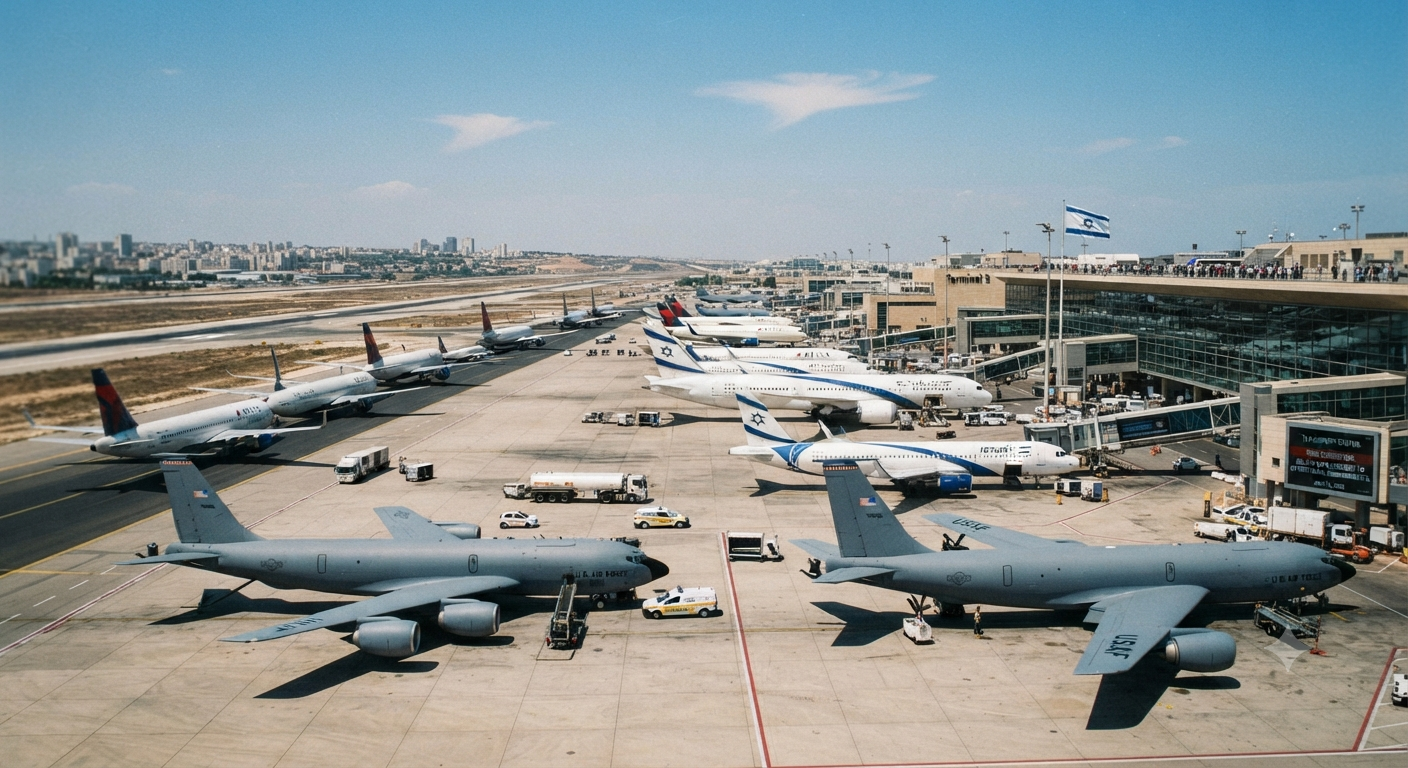
The ongoing military buildup in the Middle East has created a significant operational crisis at Israel’s primary aviation gateway, Ben-Gurion International Airport. As of July 14, 2026, the United States has frozen the planned removal of its aerial refueling tankers from the airport, a move triggered by mounting tensions and renewed hostilities with Iran. This decision has placed significant strain on the airport’s infrastructure, with the Israel Airports Authority (IAA) warning that up to 50,000 flight tickets could be at risk of cancellation during the peak summer travel season.
A Return to Congestion
Earlier this summer, following the signing of a memorandum of understanding (MoU) on June 17, 2026, intended to pause the war between the U.S.-Israeli coalition and Iran, there was optimism that the airport would return to normal operations. The U.S. had begun a gradual drawdown of its fleet, which had numbered approximately 75 refueling and cargo aircraft at the height of the military buildup that began in late February 2026.
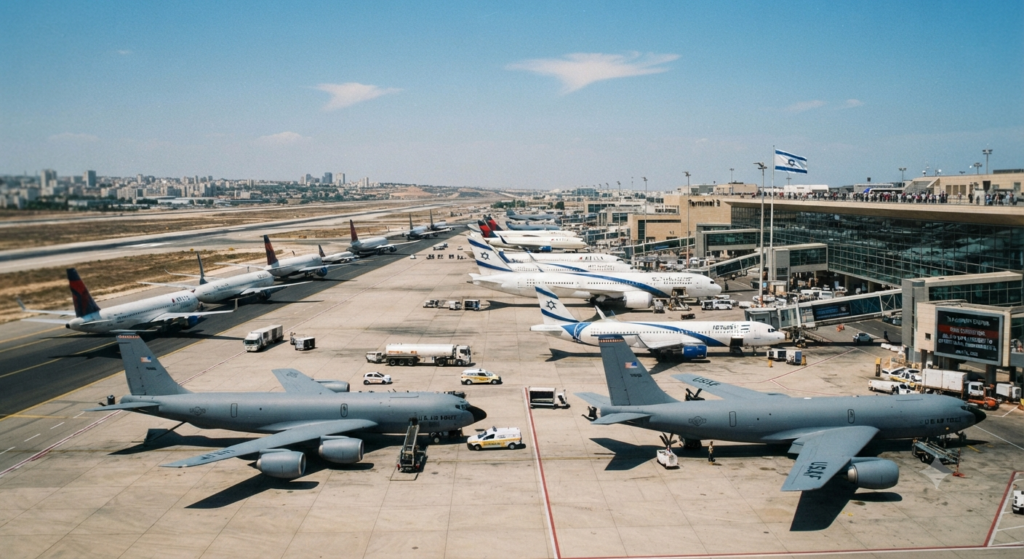
However, the recent escalation in regional hostilities—including a blockade of the Strait of Hormuz and renewed military engagements—has led to a sharp course reversal. By mid-July, the evacuation process was halted, and several U.S. aircraft that had previously departed were reportedly permitted to return to the tarmac. As of July 14, reports indicated that 33 to 34 U.S. refueling aircraft were occupying critical parking spaces intended for commercial airliners.
Operational and Economic Impact
The presence of these military assets has severely curtailed the airport’s ability to handle civilian traffic. According to the IAA, the military buildup has reduced Ben-Gurion to approximately one-third of its total operational capacity. At various points during the conflict, the congestion was so severe that 70% of airport activities were restricted, with the airport unable to accommodate the normal flow of 80,000 to 100,000 passengers daily.
The economic ramifications are substantial. IAA Director-General Sharon Kedmi noted that losses had already reached approximately $190 million, with projections suggesting that these figures could climb to nearly $700 million if the military presence persists through the end of 2026. Industry officials have also warned that the increased operational costs for local airlines are likely to be passed on to passengers, further straining the travel sector.
Diplomatic and Political Tensions
The situation has become a point of contention between Israeli officials and their American counterparts. Israeli Transportation Minister Miri Regev has taken a firm stance, declaring that the country must prioritize its commercial obligations. “We promised that we will enable commercial flights and we will not cancel a single ticket because of American refueling planes,” Regev stated.
The Israeli government has implemented a strict cap on the U.S. presence at Ben-Gurion. Regev instructed that no more than 20 U.S. refueling tankers will be permitted to remain at the airport, with any additional aircraft required to land at designated Israeli Air Force bases. Despite this, the arrival of new U.S. tankers in the days following the announcement has led to continued friction, with the Transport Ministry insisting that any arrivals be limited strictly to “refueling purposes” rather than long-term parking.
A Uncertain Summer for Travelers
For the thousands of Israelis and tourists relying on Ben-Gurion for summer travel, the outlook remains volatile. The IAA has cautioned that if the parking shortage is not resolved, they will be forced to notify airlines to reduce operations, potentially resulting in mass cancellations beginning in early August.
As regional security concerns continue to dictate the deployment of military assets, the tension between national security requirements and the stability of the commercial aviation sector remains unresolved. For now, officials are urging the Defense Ministry to find alternative solutions to accommodate the U.S. fleet without compromising the travel plans of tens of thousands of citizens.











Leave a Reply